
Gently Crushed: What Naturally Smooth Coffee Really Means
By the time you take your first sip, your coffee has already come a long way. It began as a cherry on a hillside, maybe thousands of miles from your kitchen. Someone picked it, processed it, dried it, sorted it, bagged it, and shipped it before a roaster ever touched it. Each of those steps leaves a fingerprint on the cup.
One stage gets far less attention than the rest, though: what happens to the bean between green coffee and cup. That's the stage we've obsessed over at Rare Estate Coffee, and it's why we pair a gentle crushing process with small-batch infrared roasting.
The idea is easy to say and harder to do well. Handle the coffee carefully, roast it with attention, and let the character already inside the bean show up in your cup.
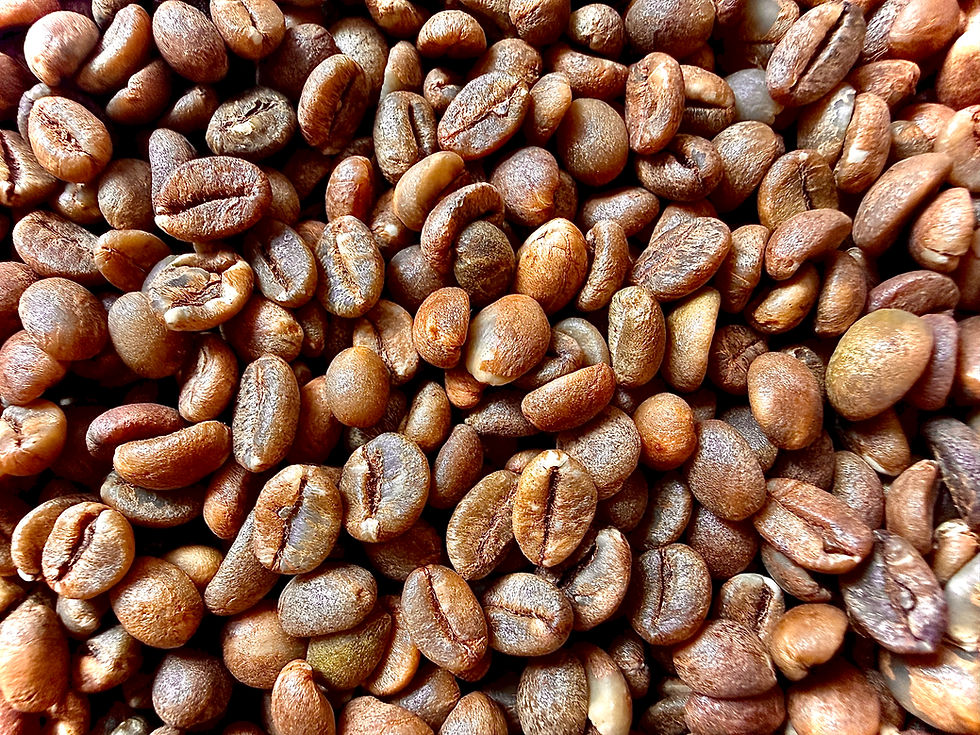
Why we use the crushing process
You've probably had this experience. The bag promises blueberry, chocolate, or jasmine, and then you brew it and taste bitterness, harshness, maybe a scorched edge. Sometimes the coffee is simply not great. But often the flavor got lost somewhere along the way, in farming, processing, storage, roasting, or brewing.
We got curious about that middle stretch, after the green bean is ready and before you drink it. Instead of breaking the bean down aggressively, we use a gentler method, with one goal: keep as much of the bean's natural flavor as we can. Nothing is added, and nothing is used to mask the coffee. If a coffee comes from a remarkable place, hiding what makes it remarkable would defeat the purpose.
What's actually inside a coffee bean?
A green coffee bean looks plain: small, hard, and pale. Inside it are oils, acids, sugars, and aromatic compounds that eventually turn into the flavors you taste. How a bean is handled can affect how those compounds behave once heat and water get involved, which is why we think gentle handling matters, especially for coffees that already have a lot to say.
Ethiopia is the obvious example. Coffee has grown there for centuries, often among native vegetation in forest and semi-forest settings. Varied elevations, microclimates, heirloom varieties, and local processing traditions produce cups that can taste wildly different from one another. One might remind you of jasmine and citrus, another of raspberry, dark chocolate, or black tea. With that much going on already, we don't see our job as inventing a personality for the coffee. We just try not to get in its way.
Why we roast with infrared
Roasting is where green coffee changes the most. Heat transforms the sugars, acids, and other compounds inside the bean, creating the aromas, flavors, and color we recognize as roasted coffee. A roaster is really steering a chain of chemical reactions, and small changes in how heat is applied can shift the result.
We roast in small batches using infrared heat. Infrared is radiant heat: instead of depending only on hot air moving around the beans, it delivers energy to them more directly. For us, that's one more way to control how a coffee develops.
Small batches also let us avoid a single formula for everything. An Ethiopian lot doesn't necessarily want the same treatment as a Kenyan lot, and a Vietnamese coffee has its own needs. Variety, altitude, processing method, and growing conditions all change how a lot behaves in the roaster. Because the batches are small, we can watch what's happening in front of us and make decisions for that particular coffee.
Our target isn't a light roast or a dark roast as a label. It's balanced.
So what does “smooth” really mean?
Smooth is one of the most overused words in coffee, and it can mean almost anything. Here's what we mean by it. Smooth doesn't mean weak, flat, or boring. A smooth coffee can still be bold, with fruit, sweetness, acidity, and real depth. What we're after is harmony: a cup where those things work together and the finish isn't bitter.
Our customers describe it better than we do. Some taste chocolate and raspberry in our Ethiopian coffees. Others notice fruit sitting underneath deeper roasted notes. One told us their sister had tried coffee after coffee without finding one she could drink black, until she tried ours. We love hearing that, because it tells us the coffee is giving people something worth slowing down for.
In the cup: Guji Danbi Udo
Guji is one of Ethiopia's best-known coffee regions, and the reputation is earned. Coffees from here can be strikingly expressive, often combining fruit, florals, sweetness, and deeper, chocolate-like notes.
Danbi Udo sits near Shakiso in the Oromia Region. High elevations and cooler conditions give the cherries more time to develop, and much of the coffee comes from small family farms. Ripe cherries are harvested and brought to local processing stations to be sorted and prepared.
In the cup, a Guji Danbi Udo is often layered. Fruit tends to arrive first, then sweetness, then the deeper notes as the coffee cools, so the last sip may taste different from the first. If you're making a pour-over, give it time to cool. Try a few sips black before reaching for milk or sugar, and see what changes.
In the cup: Yirgacheffe Chelchele
Yirgacheffe Chelchele barely needs an introduction among coffee people. Cups from this part of Ethiopia are often linked with floral aromas, citrus brightness, and a delicate, tea-like body. Chelchele is one of the area's better-known names, grown at high elevations under native shade trees.
This is exactly the kind of coffee that makes us wary of heavy-handed processing. A delicate coffee has no reason to taste aggressive. Brew it slowly and pay attention: you may catch the fragrance first, then citrus or other fruit, then something softer and sweeter at the finish.
Why we keep coming back to gentle handling
There are plenty of ways to make coffee louder. You can roast it darker, add flavorings, or build a blend around one dominant taste. We're not interested in any of that. We'd rather start with a good coffee and interfere as little as we can.
Our crushing process is one part of that approach, and small-batch infrared roasting is another. The origin, variety, altitude, and processing of the coffee do the rest. That also means our coffees won't all taste alike, and we're fine with that. A Guji should taste like a Guji, a Yirgacheffe should have its own personality, and a coffee grown thousands of miles away shouldn't be forced to taste like everything else on the shelf.
That's what we mean by naturally smooth: coffee that's still full of character, because it was handled carefully enough for the character to survive.


Comments