
From Colonial Accident to Global Powerhouse: The Story of Kenyan Tea
Kenya's first tea bushes went into the ground in 1903, planted as a curiosity. It would be another two decades before anyone treated tea as a business. Today, Kenya is the world's leading exporter of black tea by volume, a position the UN Food and Agriculture Organization's Intergovernmental Group on Tea has credited it with holding since at least 2022.
That didn't happen because Kenya was destined for tea greatness. It happened because a handful of failed coffee and flax fields, planted by a settler who didn't know any better, produced one of the more improbable success stories in African agriculture—one that echoes how Kenyan coffee built its own reputation.
What Kenyan Tea Actually Is
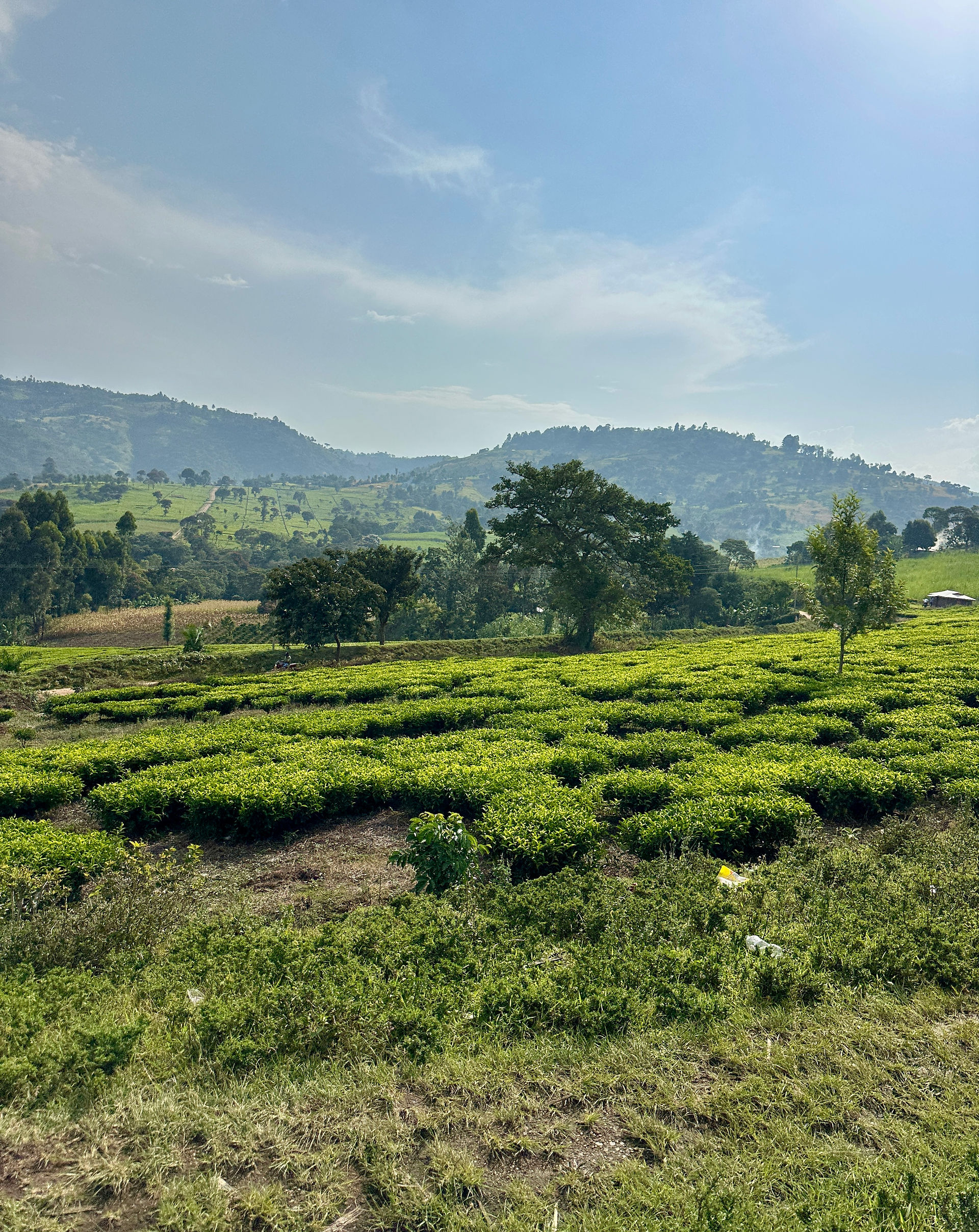
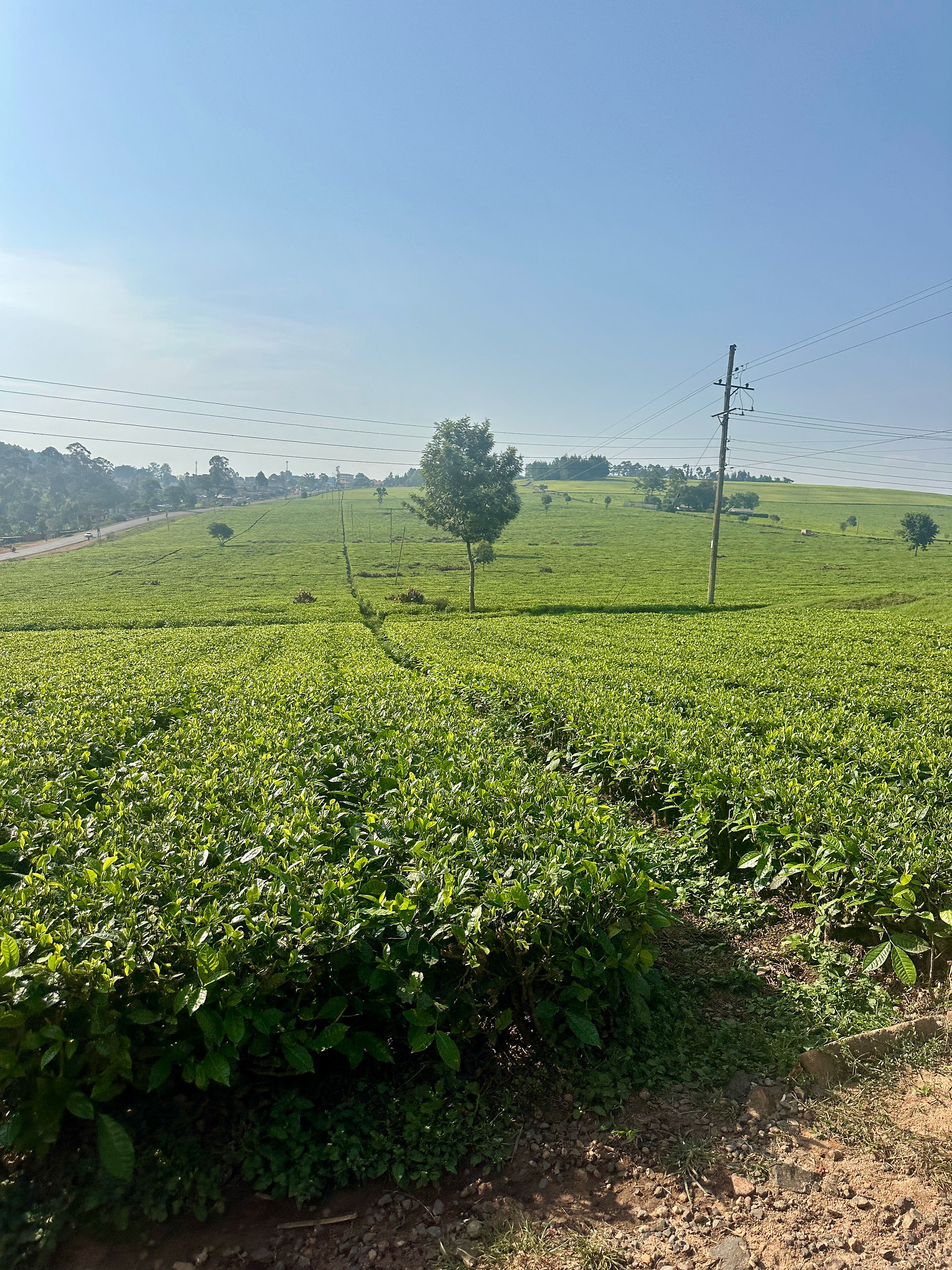
Kenyan tea is predominantly black tea, grown across the country's cool, high-altitude highlands. Volcanic soil, heavy rainfall, and an equatorial climate let the bushes produce leaves nearly year-round, with no winter dormancy.
Most of the harvest goes through CTC processing—“crush, tear, curl”—giving Kenyan tea its trademark briskness, deep color, and body—which is why blenders worldwide lean on it so heavily. Kenya also produces smaller amounts of green, white, and specialty teas, including a distinctive purple cultivar bred by its researchers.
What the tea is, where it grows, and why it tastes as it does trace back to the same highland conditions that also grow exceptional coffee.

An Experiment Nobody Expected to Work
The first planting came from British settler G.W.L. Caine, who put tea bushes near Limuru, north of Nairobi, as an ornamental experiment. The crop's real origin belongs to a settler with worse luck and more patience.
Around the same time, according to Kiambethu Farm's own history, Arnold Butler McDonell bought roughly 350 acres nearby to farm coffee, corn, and flax. All three failed at that altitude. In 1918, a friend returning from India handed him a few tea seedlings almost as an afterthought. McDonell planted about 20 acres; the bushes thrived where nothing else had, and by 1926 he was selling processed tea commercially.
Some accounts credit him with producing the first commercially processed tea in Africa, though tea board histories stop short of naming him—they do confirm private tea gardens were taking root around Limuru before commercial estate farming began.
McDonell's success was the proof of concept the settler economy needed. Large-scale estate cultivation followed in 1924, and for the next three decades tea stayed the exclusive preserve of European growers—African farmers weren't permitted to grow it at all. Tea was tied to colonial land policy and control over export infrastructure: keeping tea in European hands meant keeping the whole value chain there.
From Colonial Estates to African Smallholders
That held until the Swynnerton Plan of 1954, a land-tenure reform meant to consolidate fragmented holdings and give African farmers registered title and access to credit. One side effect was lifting restrictions on which cash crops they could grow. Tea, alongside coffee and pyrethrum, opened to African cultivation for the first time—though opportunity alone wasn't enough. That took a purpose-built institution.
The KTDA Revolution
In 1964, the newly independent government established the Kenya Tea Development Authority (KTDA) to organize small-scale farmers, many working just an acre or two, into a shared system of factories that would process and market their leaf collectively. Rather than leaving production to large estates.
It's arguably the single most consequential decision in the modern history of Kenyan tea, and it still shapes the industry today. It helped, too, that Kenya's near-equatorial highlands have no true dormant season: unlike Assam or Ceylon, the bushes flush nearly year-round, giving smallholders a reliable crop to build a livelihood on.
How Kenyan Tea Reaches the World
A farmer picks green leaves and delivers them to a nearby factory within hours, since fresh leaves don't wait. The factory withers, cuts, ferments, and dries it into finished black tea, which typically heads to the Mombasa Tea Auction, where blenders and exporters buy it and ship it worldwide. Farmer to factory to auction to blender to your cup—that's the backbone of everything that follows.


A Smallholder Industry, at Scale
As of early 2026, KTDA's 71 smallholder factories are owned by more than 650,000 growers and account for roughly 52% of national tea production, per Tea Board of Kenya data reported by the Daily Nation. Large estates run by companies like Unilever and James Finlay make up most of the remainder.
That scale comes with real financial strain. A Tea Board of Kenya audit ordered by the Ministry of Agriculture, reported by the Daily Nation in March 2026, found 69 smallholder factories carrying a combined Sh34.05 billion in outstanding loans as of December 31, 2025. This includes Sh30.36 billion in commodity loans taken out largely to fund farmer bonus payments.
Dozens of factories had misreported those balances in their own financial statements. In response, Agriculture Principal Secretary Paul Kipronoh Ronoh announced in August 2026 that 10 KTDA-managed factories, including Kapkoros and Litein, had been granted autonomy from their parent structure, with seven more expected to follow.
The smallholder model solved the original problem of access to processing and markets; it also created a newer set of challenges around governance, borrowing, and farmers' exposure to commodity-price swings.
Where the Industry Stands in 2026
Production has been strong this year. Per the Tea Board of Kenya, April 2026 output came in 13.32% above the same month in 2025, reaching close to 58.7 million kilograms on above-average seasonal rainfall.
Conditions at the Mombasa Tea Auction, run by the East African Tea Trade Association, have been more mixed. EATTA figures show smallholder factories sold about 128.6 million kilograms there between January and June 2026, down from roughly 138.8 million kilograms the year before, with unsold volumes climbing as the year went on.
Part of that softness has been linked to a new levy. Under the Tea Board of Kenya's Tea (Levy) Regulations, 2026, effective May 1, exporters now pay 0.8% of auction or customs value, earmarked for a price stabilization fund, research, and infrastructure.
Exporters and some factory directors say it has raised costs while demand is already uneven; Tea Board officials counter that quality and global demand, not the levy, move prices. It's an unresolved dispute likely to keep shaping the conversation through the rest of the year.


Purple Tea: A Deliberate Bet on Differentiation
Purple tea is the most interesting thread running through Kenyan tea right now, and unlike most tea innovations, it didn't happen accidentally. The state-run Tea Research Foundation of Kenya spent roughly 25 years developing a new cultivar before it was approved for commercial release in 2011 as TRFK 306.
The bushes produce burgundy-to-purple leaves thanks to high concentrations of anthocyanins, the pigment family responsible for the color of blueberries and red cabbage. According to Samson Kamunya, the plant breeder who led its development, said the cultivar wasn't bred for flavor; researchers were chasing a high-value, antioxidant-rich crop resistant to drought, frost, and disease.
The market rewarded it anyway: researchers have cited purple tea fetching three to four times the price of standard black or green tea, with some accounts placing the premium even higher, and research into its fuller health properties is still ongoing.
TRFK 306 is a genuine agricultural innovation. Whether the health claims hold up to clinical scrutiny is a separate, still-open question. Either way, the cultivar is genuinely rare: developed in Africa, for African conditions, by African researchers.
What This Has to Do With Kenyan Coffee
McDonell's tea exists only because his coffee failed. Kenya's two most famous export crops came out of the same highland soil, which eventually rewarded both—just never quite as the people planting it expected.
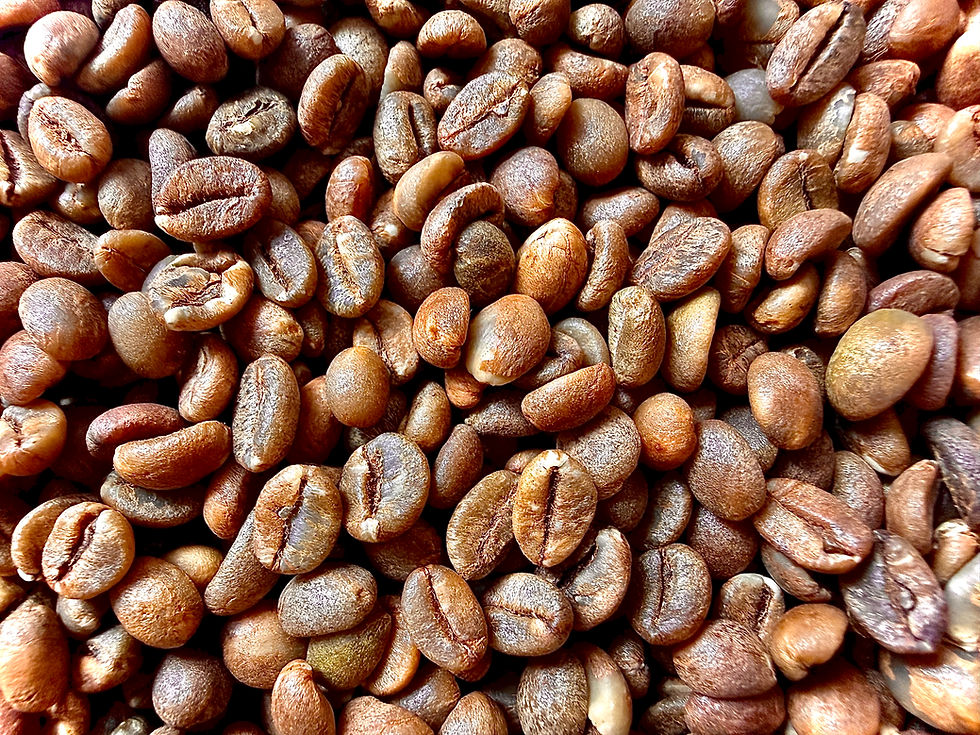
Kenyan coffee took a slower route to its reputation. Colonial estates gradually gave way, after independence, to cooperative wet mills, where small-scale growers share processing infrastructure much the way KTDA's smallholders share tea factories. That shared history is why both crops are known for the same thing: meticulous, small-lot processing that turns an unglamorous highland harvest into something worth a premium.
Purple tea is the latest chapter in a pattern that goes back to 1918: Kenyan agriculture finding its most valuable ideas not by importing someone else's playbook but by paying attention to what its soil, altitude, and farmers were suited for.
A failed coffee crop became a tea industry. A drought-resistant lab experiment became a specialty product farmers now compete to grow. That's the same standard we hold ourselves to with our Mara Peaberry: a coffee that tastes like where it's from, not like an idea of what coffee is supposed to taste like.




Comments